




Homeland
Homeland is a multi-layered installation that explores the intersections of migration, identity, and systems of control. Drawing from personal experiences as an Iranian immigrant to the United States, the project reflects on how socio-political structures and data practices shape immigrant identities and their reception by host communities. Through a combination of storytelling, design, and algorithmic interventions, Homeland critiques the processes of othering and the fragile dynamics of belonging.
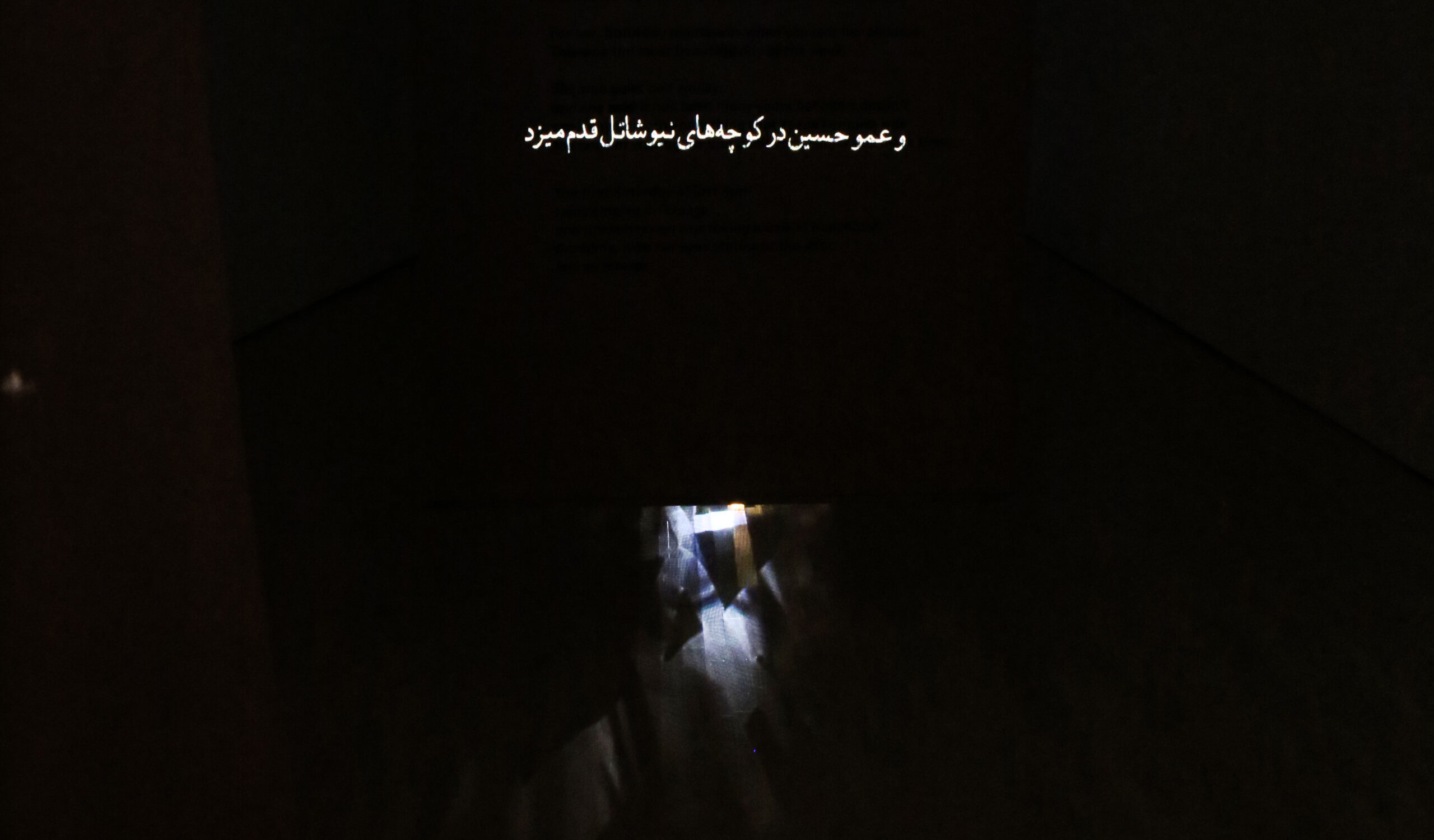
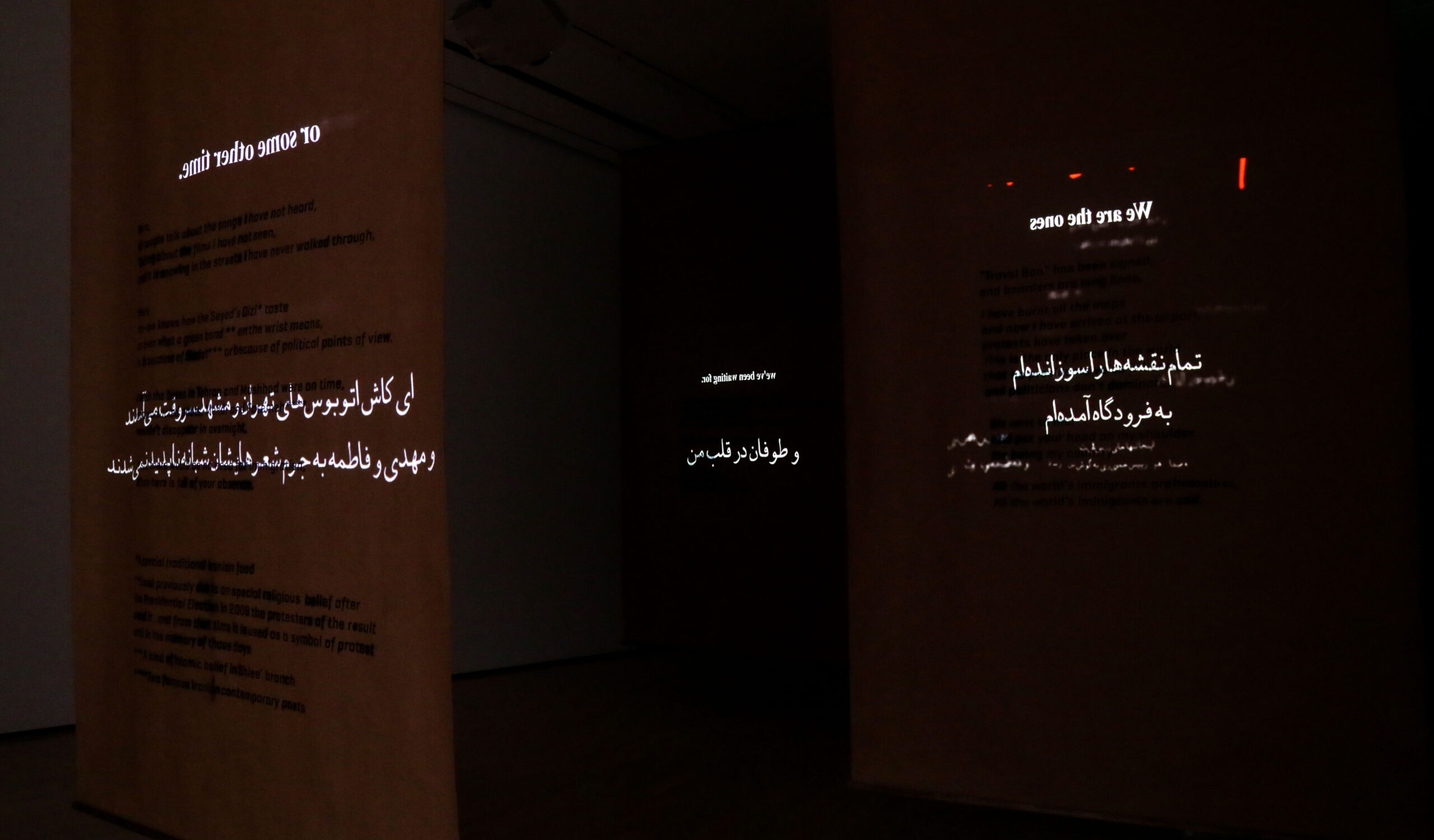
The installation transforms the gallery into a labyrinth of suspended kraft paper curtains, each bearing poetic narratives of displacement, cultural loss, and resilience. These texts, printed in English and accompanied by ephemeral Persian projections, emphasize the tension between cultural dominance and fading memory.[1] The journey through the maze reflects the liminal spaces immigrants navigate in their search for acceptance, while the seven curtains draw on Persian and Islamic traditions of transformative journeys, such as the Haft Khan in Ferdowsi’s Shahnameh, connecting personal stories to universal themes of resilience and self-discovery.[2]
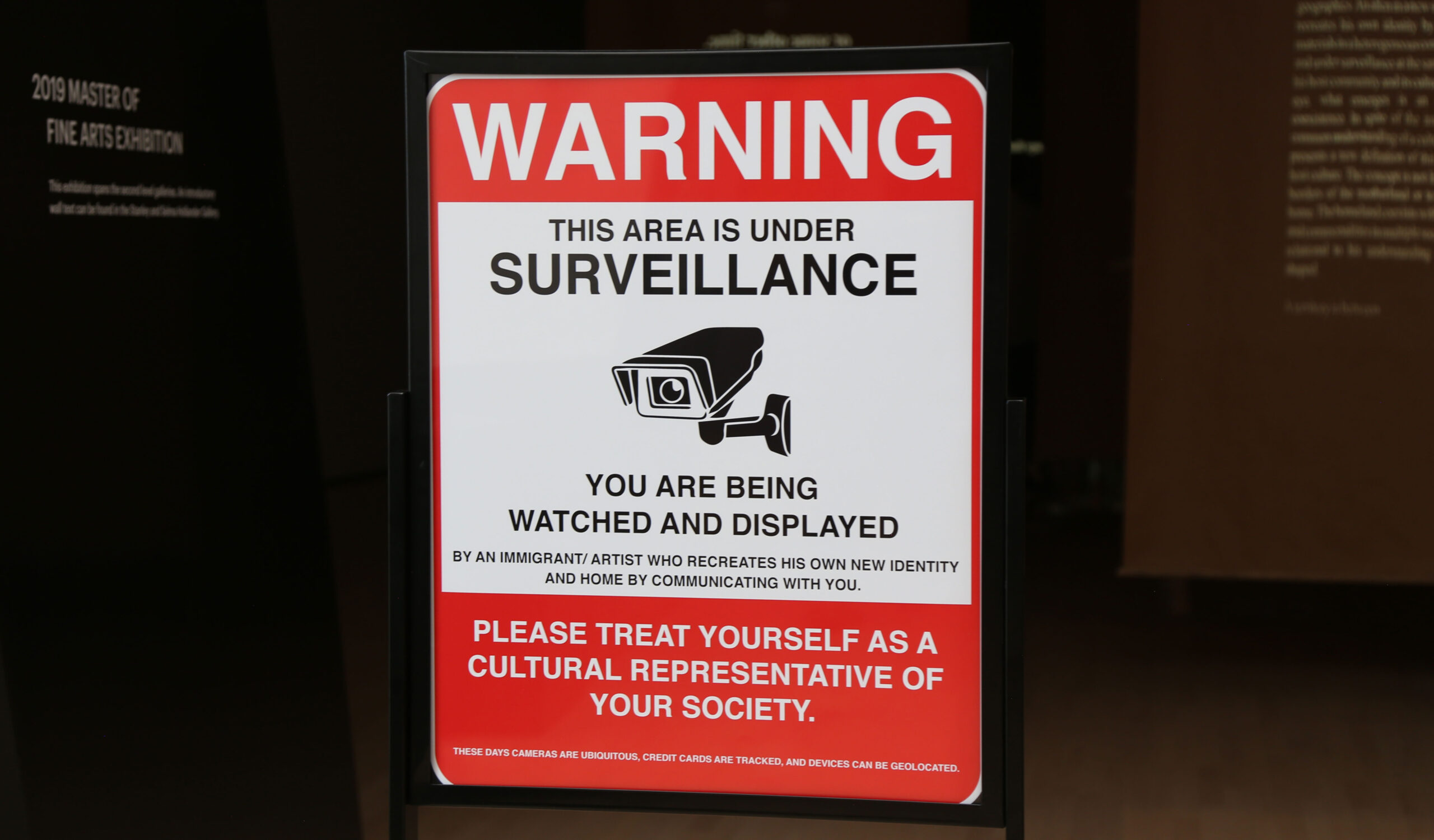
At the maze’s end, the audience encounters a fractured typographic installation merging the English word Homeland with its Persian counterpart وطن, layered with maps of Mashhad and East Lansing to symbolize the fragmented identity of an immigrant caught between two worlds.[3] A hidden surveillance system integrates audience faces into the typographic projection, critiquing data systems that commodify identities and perpetuate exclusionary practices.[4] This algorithmic intervention highlights the historical and social legacies of control embedded in contemporary data-driven technologies, questioning how systems often framed as neutral reinforce inequalities.[5]
Beyond its critique of surveillance, Homeland examines the role of host communities in shaping immigrant identities. The project invites audiences to reflect on their participation in systems that either welcome or alienate immigrants, showing how acts of inclusion or exclusion define the immigrant’s sense of belonging.[6] By bridging personal storytelling with cultural and algorithmic commentary, Homeland urges a reimagining of systems that honor differences and build empathy, fostering more equitable and inclusive futures.
[1] “The dual presence of dominant and fading cultures mirrors the immigrant’s negotiation of identity.” Shoshana Zuboff, The Age of Surveillance Capitalism: The Fight for a Human Future at the New Frontier of Power (New York: PublicAffairs, 2019), 90–120.
[2] Ferdowsi, Shahnameh: The Persian Book of Kings, trans. Dick Davis (New York: Viking, 2006).
[3] Nancy Skolos and Thomas Wedell, Type, Image, Message: A Graphic Design Layout Workshop (New York: Rockport Publishers, 2006), 56–72.
[4] Hassan Zaringhalam’s fusion of text and imagery in Persian calligraphy is discussed in Mehdi Hosseini, “Modern Calligraphy in the Qajar Era,” Iranian Art Review 22, no. 3 (2009): 45–67.
[5] Michel Foucault, Discipline and Punish: The Birth of the Prison (New York: Vintage Books, 1977), 136–141.
[6] Adrian Favell, Philosophies of Integration: Immigration and the Idea of Citizenship in France and Britain (London: Palgrave Macmillan, 1998), 3–12.
 Previous Project
 Next Project
MFA Thesis , Study in human visual cultures in contemporary societies shaping the life experiences of immigrants.
Through the use of typography and artificial intelligence, Homeland aims to examine concepts such as belonging, othering/feeling 'othered', and the invasion of privacy.
CNC Cuts on Wood, Artificial Intelligence, Facial and Identity Recognition, Sound, Motion Graphic, Print Making.
2019
This would not have been possible without the generous support of my friends and colleagues Morehshin Allahyari, Fatemeh Ekhtesari, Mohammad Mahmoudi, Seyed Hamid Hoseini, Seyed Mehdi Hoseini, and Narjes Shateri
Eli and Edythe Broad Art Museum at Michigan State University, East Lansing, MI
- Categories:
- Skills:
- Share:
Previous ProjectNext Project