


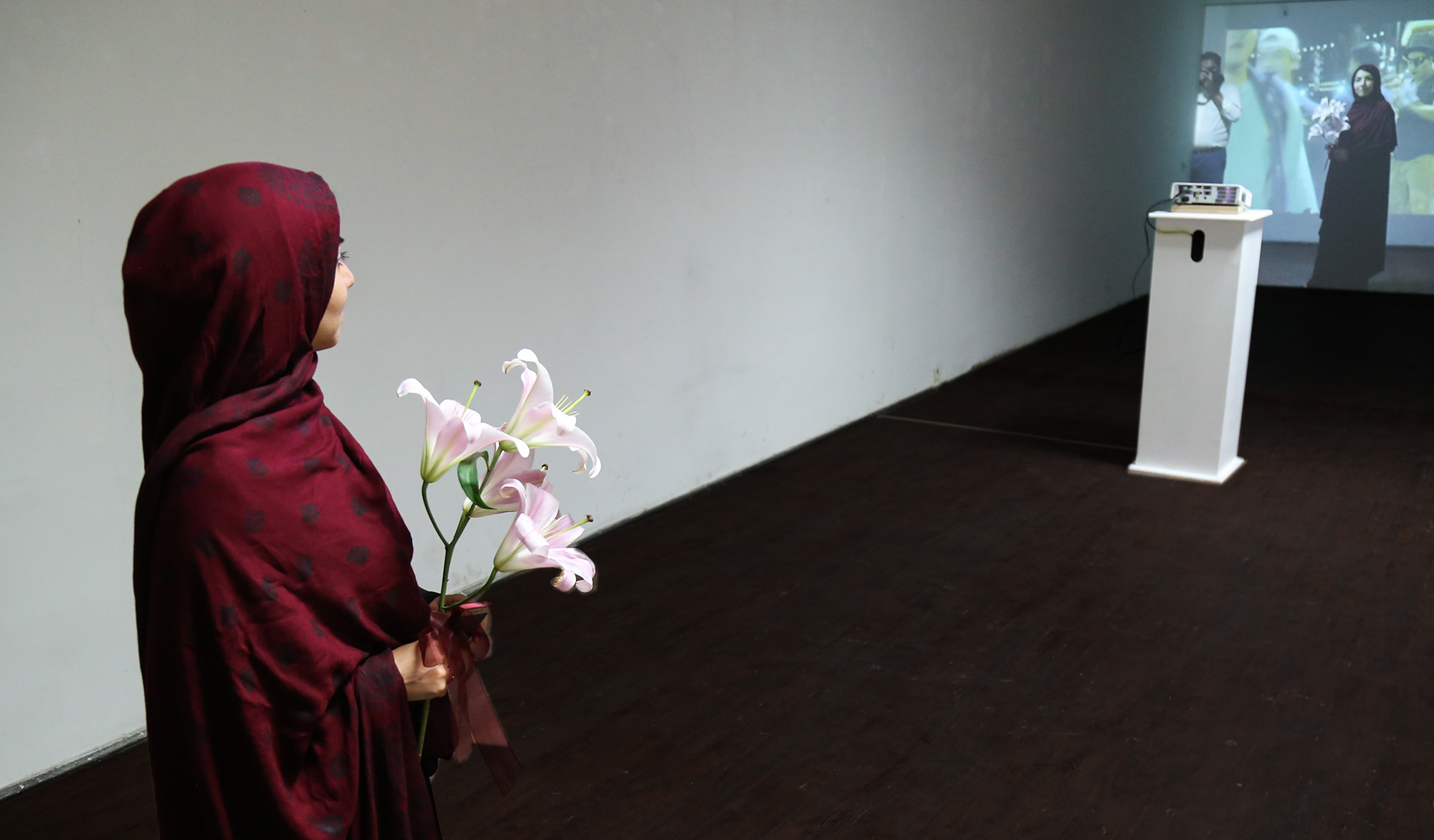


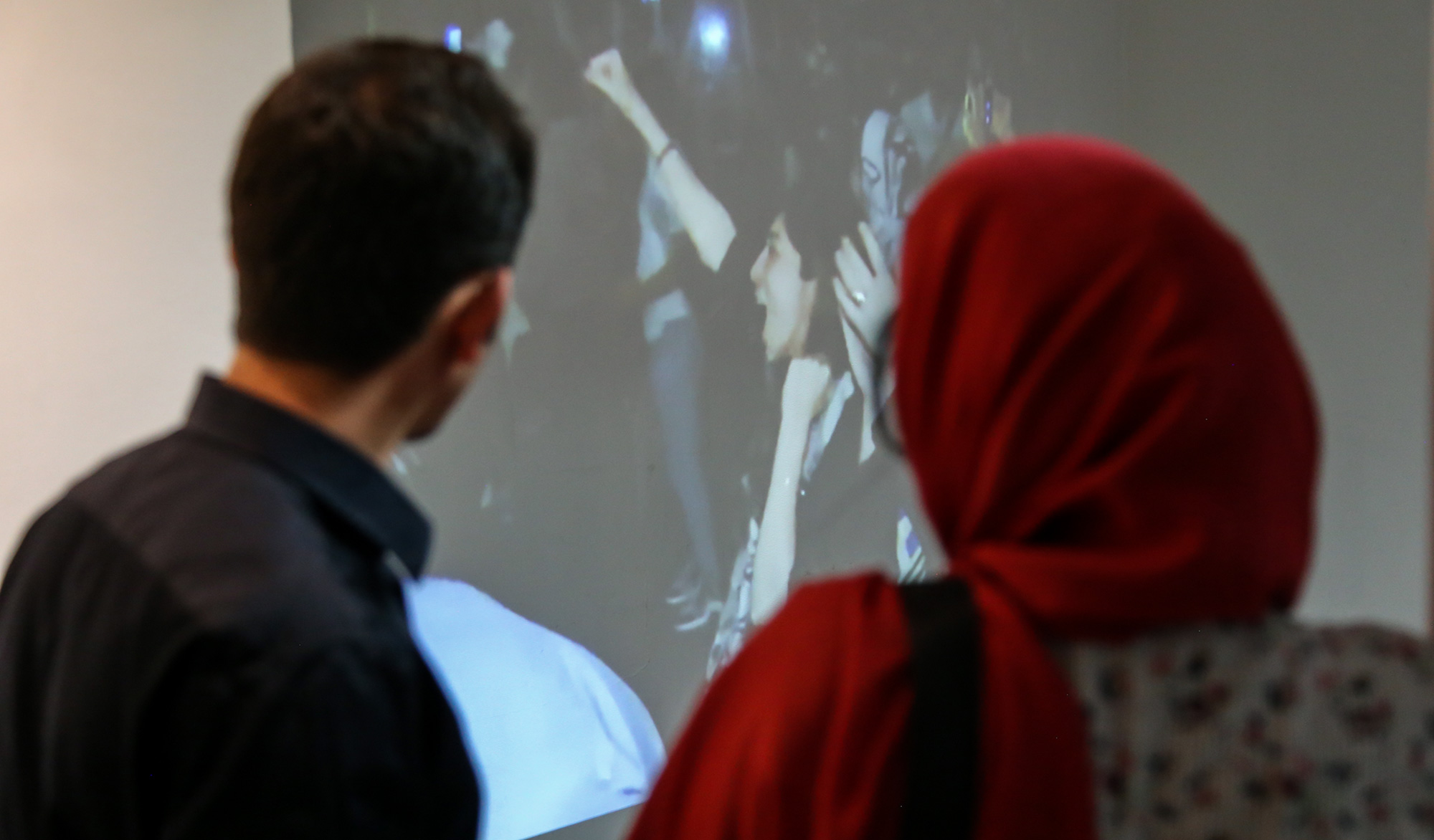
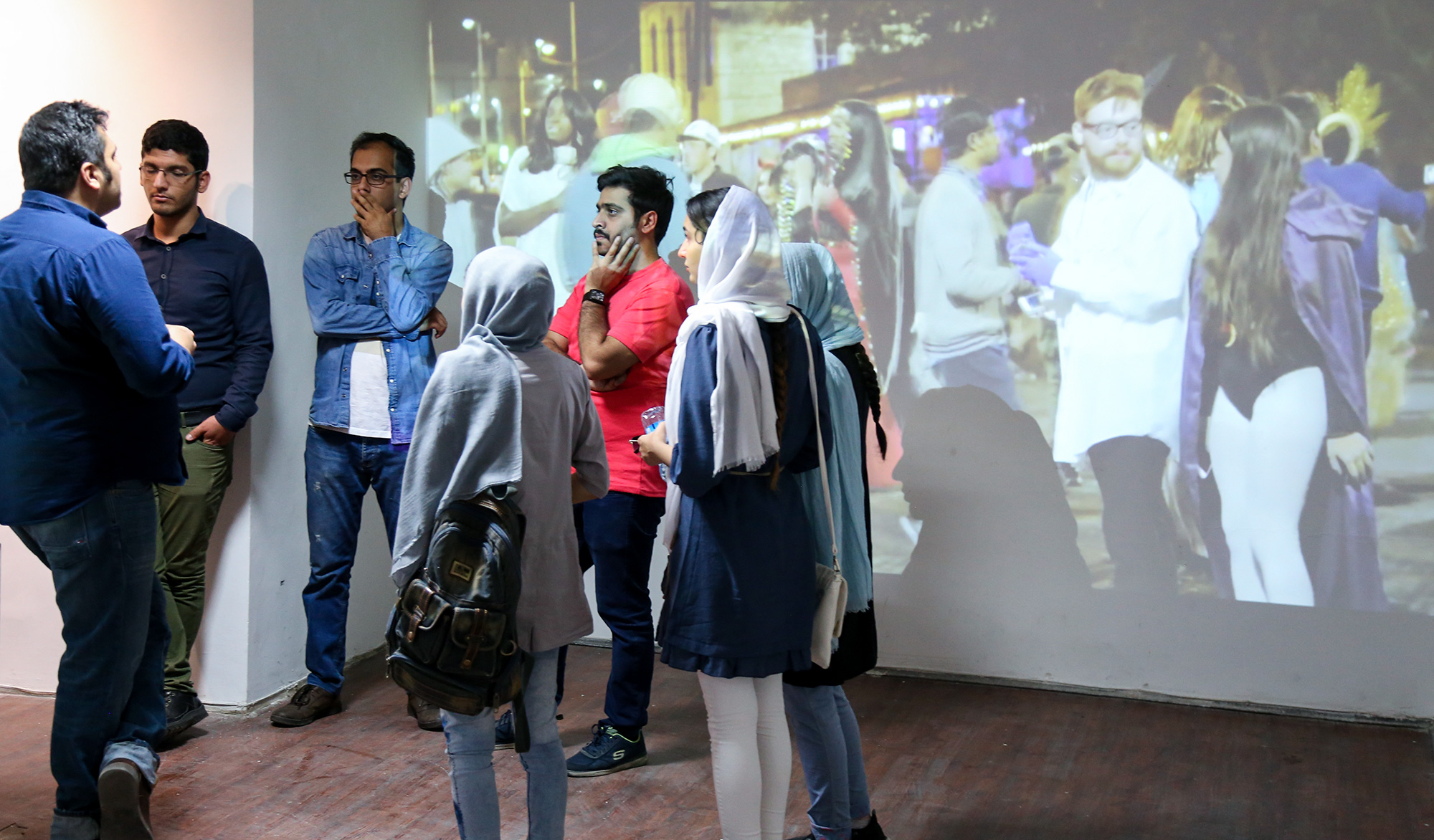

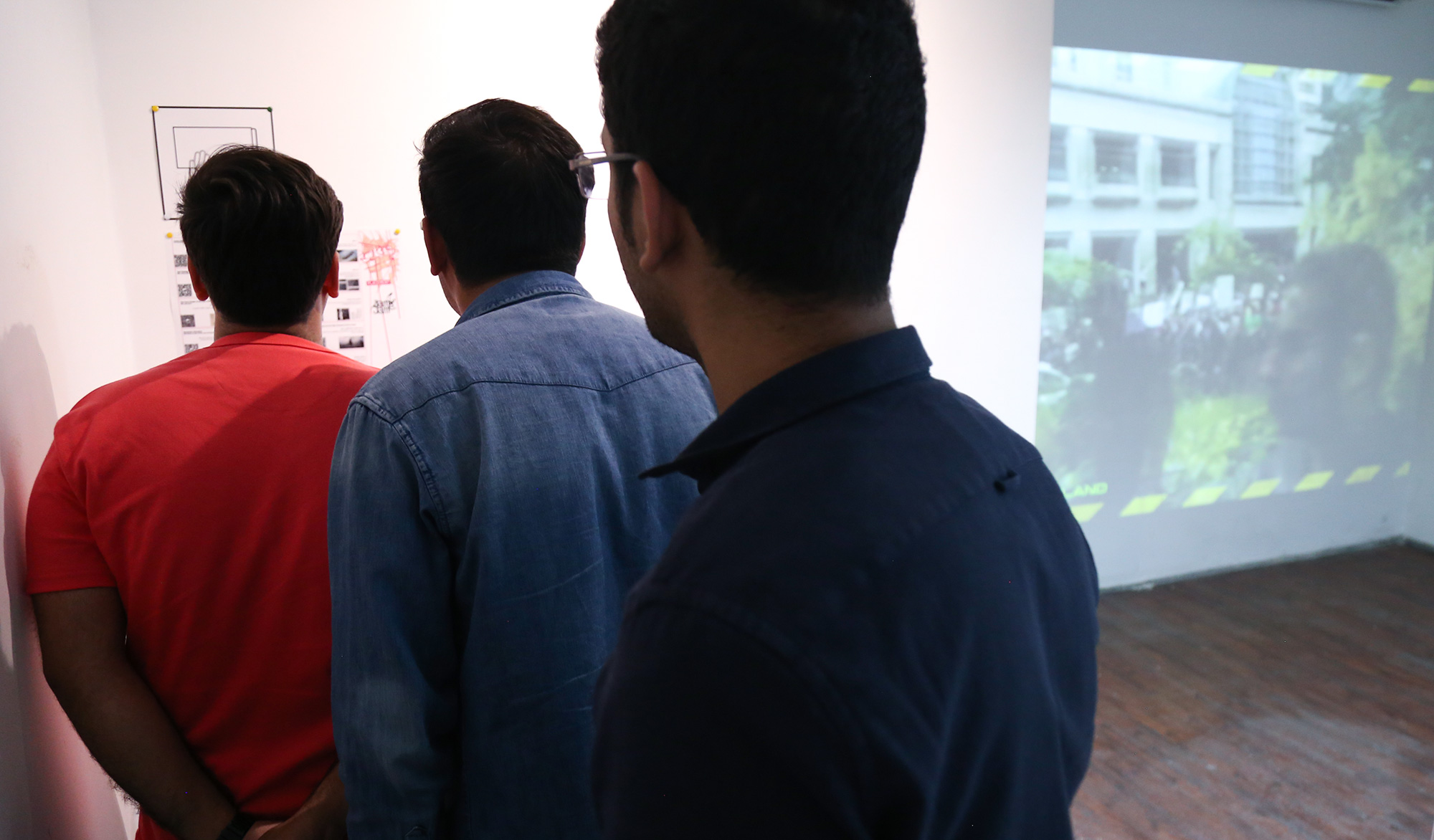
Placement is an immersive installation that interrogates the socio-political dynamics of media representation, global injustice, and the pervasive systems of surveillance that define modern life. Upon entering the gallery, audiences are confronted by a towering wall-sized screen streaming global news and media footage—protests, movements, and humanitarian crises. The content highlights stark disparities in how events are represented, drawing attention to the ways media constructs perceptions of global crises and hierarchies of suffering. The work questions whether media truly reflects reality or operates as a system of control, selectively shaping visibility to serve underlying agendas[1].
At the center of the gallery, a camera records the audience’s presence as they navigate the space, seamlessly merging them with the media content. This live feed is projected onto the far wall, transforming viewers into participants within the media they are observing. By implicating the audience in the very systems they consume, the work blurs the line between observer and observed, highlighting how data practices and surveillance technologies convert human experience into material for manipulation and commodification[2].
The installation resonates with artistic explorations of surveillance and interaction, such as Rafael Lozano-Hemmer’s Surface Tension and Shadow Box series, where participation itself reveals the power dynamics inherent in surveillance. It also aligns with Trevor Paglen’s Invisible Images, which uncovers the hidden infrastructures of data collection and surveillance, and Harun Farocki’s Serious Games series, which critiques the mediation of global crises through digital simulations. These artistic precedents underscore how media and algorithms not only mediate reality but actively reshape it, enforcing hierarchies of visibility and influence[3].
By embedding the audience into the media landscape, Placement disrupts the passive consumption of these narratives and challenges viewers to reflect on their own complicity and agency. The installation highlights how algorithms increasingly dictate which stories are amplified and which are ignored, constructing public consciousness while perpetuating biases and inequalities[4]. These mechanisms do more than reflect the world; they shape it, fostering a data-driven reality where human behavior is tracked, analyzed, and commodified[5].
This installation not only critiques the ethics of media and data practices but also underscores the urgency of examining their socio-political histories. It urges audiences to consider the implications of algorithmic systems that continuously track, analyze, and commodify human behavior, shaping public discourse and individual decision-making in ways that often go unseen. At its core, Placement invites a reckoning with the ethical challenges of living in a world increasingly defined by data-driven systems, urging viewers to envision more inclusive and equitable alternatives.
[1] “Media representation is a form of power, selectively shaping visibility and fostering cultural hierarchies.” Said, Edward W. (1978). Orientalism. Pantheon Books.
[2] “Surveillance capitalism transforms human experience into raw material for predictive systems and manipulative practices.” Zuboff, Shoshana. (2019). The Age of Surveillance Capitalism: The Fight for a Human Future at the New Frontier of Power. PublicAffairs.
[3] Manovich, Lev. (2001). The Language of New Media. MIT Press. Algorithms as active agents structuring visibility and prioritization.
[4] Paglen, Trevor. Invisible Images (2017)
[5] Lozano-Hemmer, Rafael. Surface Tension (1992) and Farocki, Harun. Serious Games (2009-2010)
 Previous Project
 Next Project
Practice in Hybrid Visual Culture and Human Intersections
Practice in hybrid visual culture and human intersections, an effort to challenge the role of media in our daily life.
Interactive video installation in Gallery.
2018
Radin Art Gallery, Mashhad, Iran
- Client:
- Categories:
- Skills:
- Share:
Previous ProjectNext Project