
A Group of People Standing in a Parking Lot (Taking a Stand)
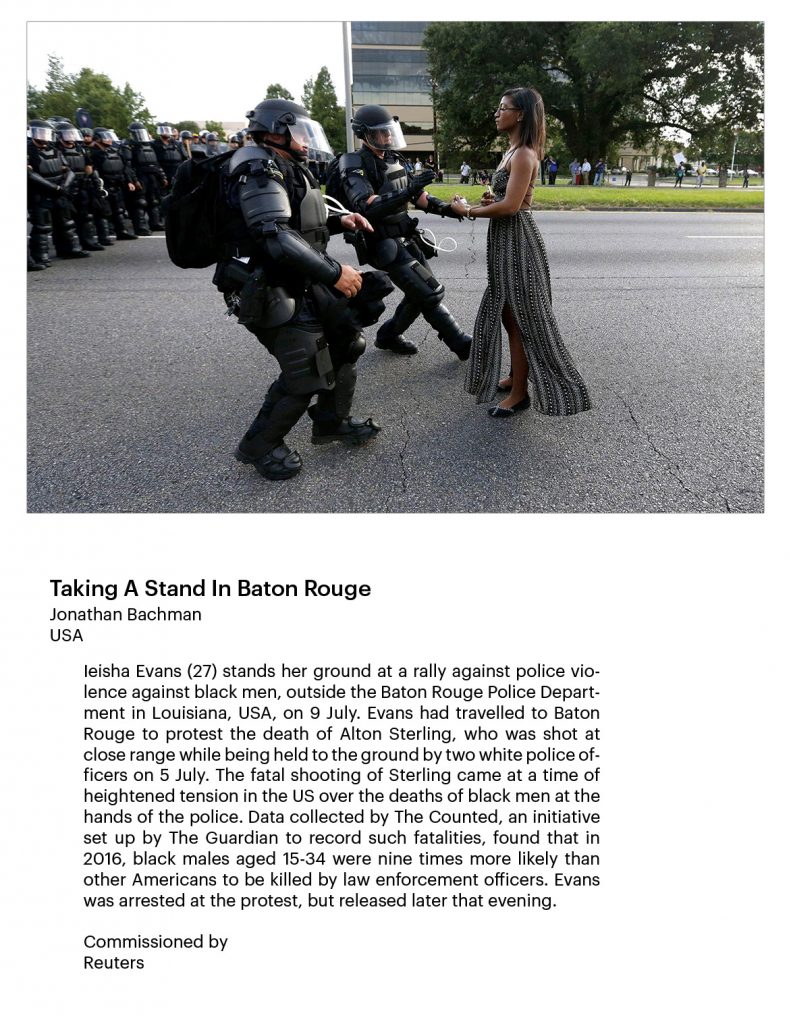
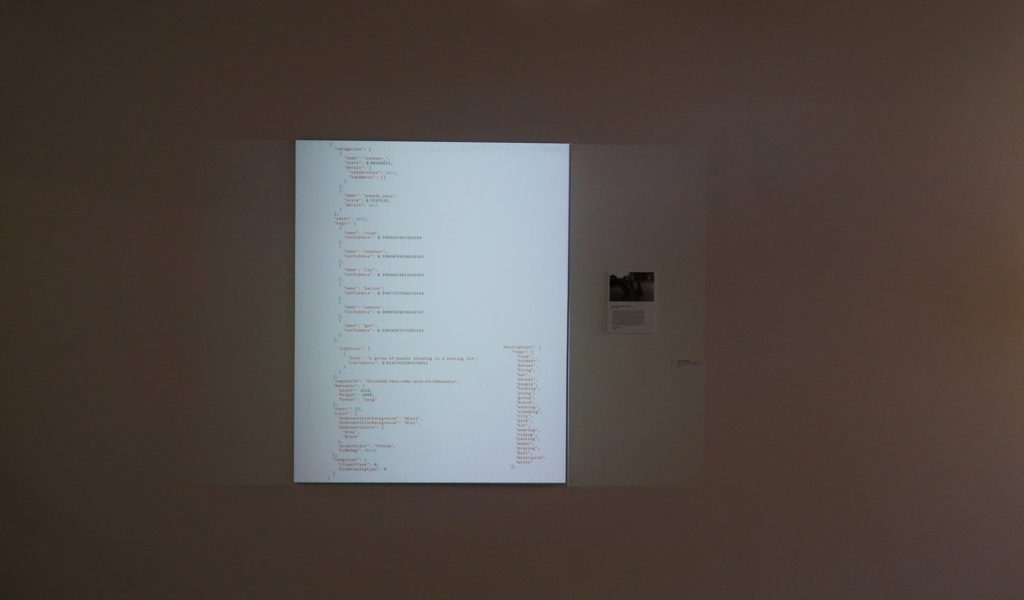
Taking a Stand is an interactive installation that examines the dissonance between human and machine vision, challenging the cultural and ethical implications of algorithmic perception. Using Jonathan Bachman’s iconic photograph of Ieshia Evans—a lone protester confronting heavily armed police officers during the 2016 Baton Rouge protests—the project critically investigates how algorithms interpret socio-political events and contrasts this with human emotional and cultural understanding.
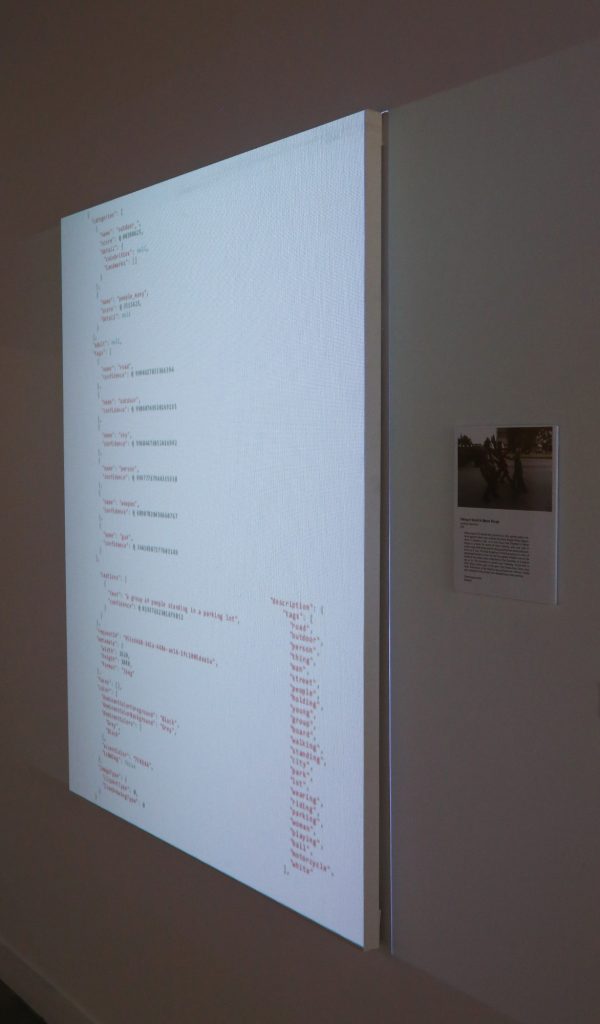
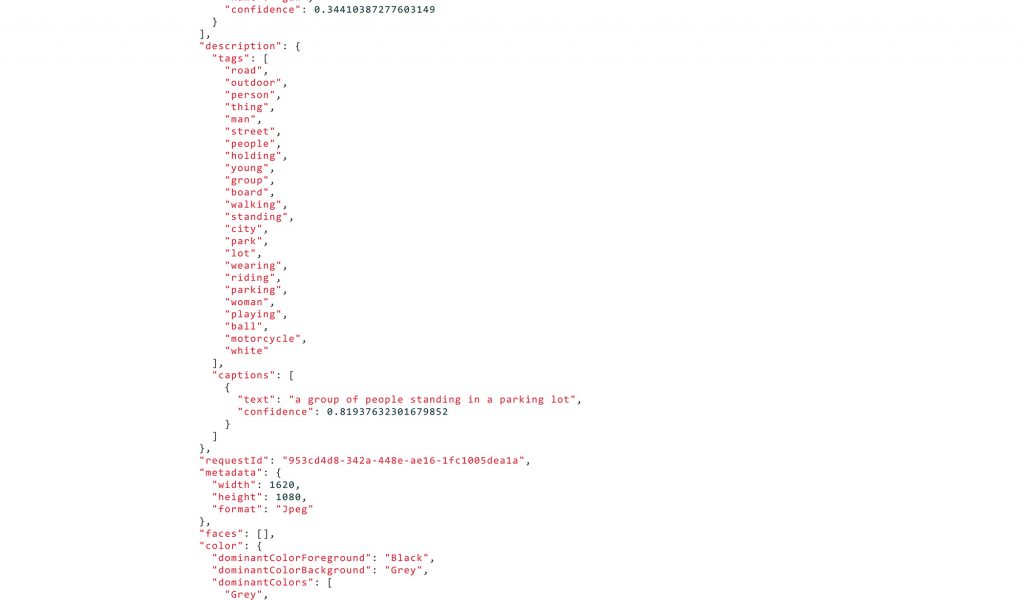
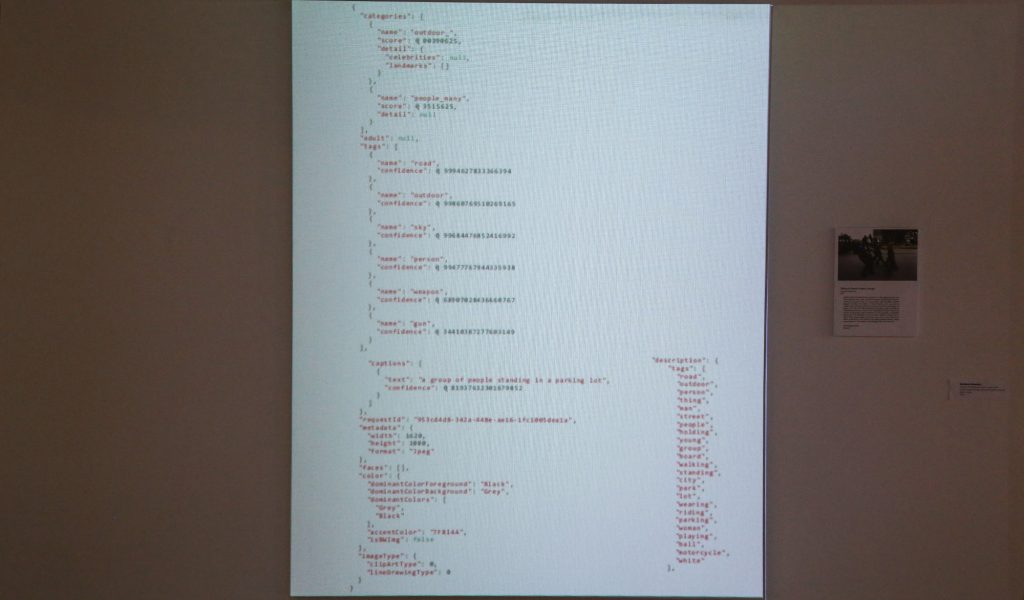
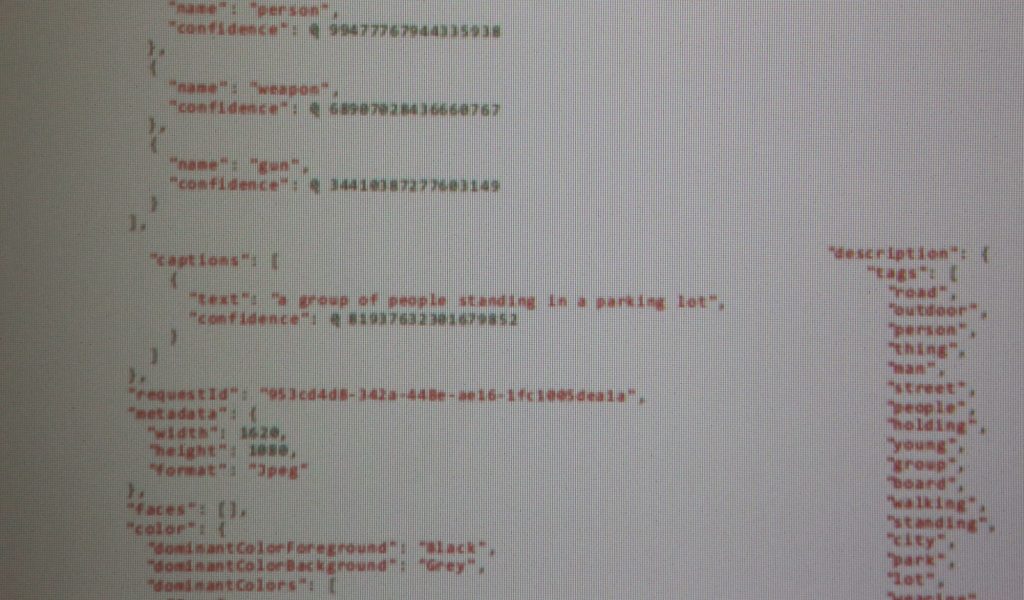
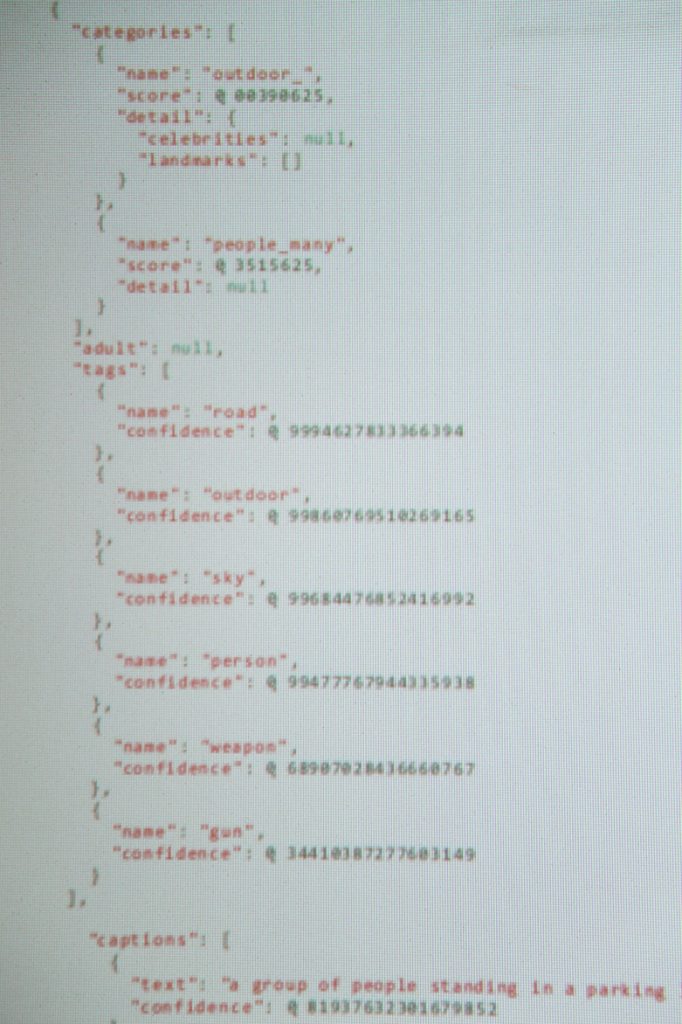
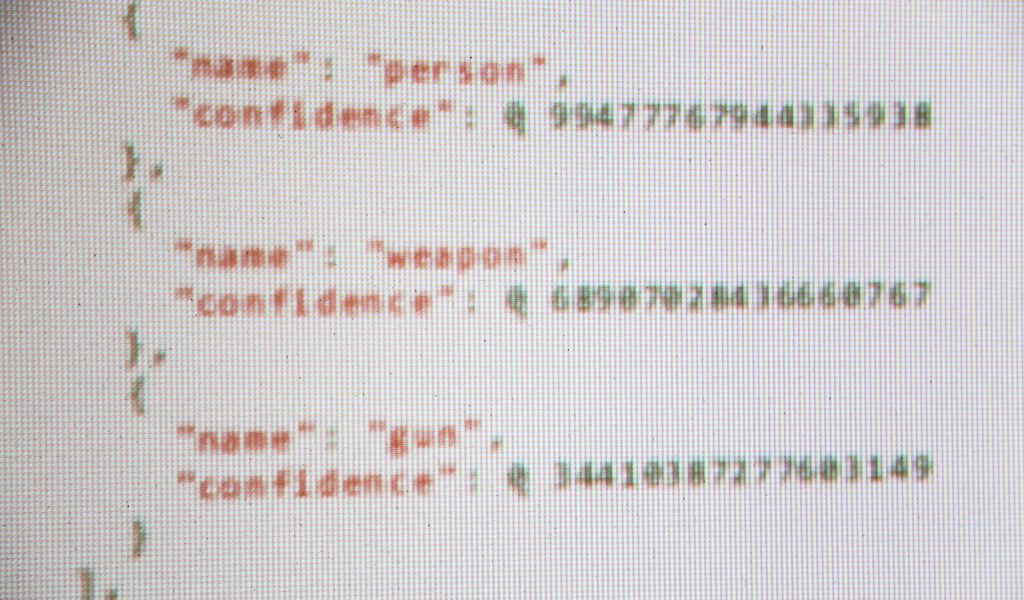
Evans’ powerful stance became a symbol of resistance, evoking comparisons to iconic images such as the “Tank Man” of Tiananmen Square.[1] However, when analyzed through Microsoft Azure’s image-to-text feature, the photograph’s algorithmic description reduces the scene to mundane objects and behaviors, prioritizing details like “a person standing” or “police equipment” while ignoring the humanistic and political weight of the moment. This reduction reveals the limitations of computational vision, raising urgent questions about the reliability of algorithmic interpretation in shaping our visual culture and collective memory.
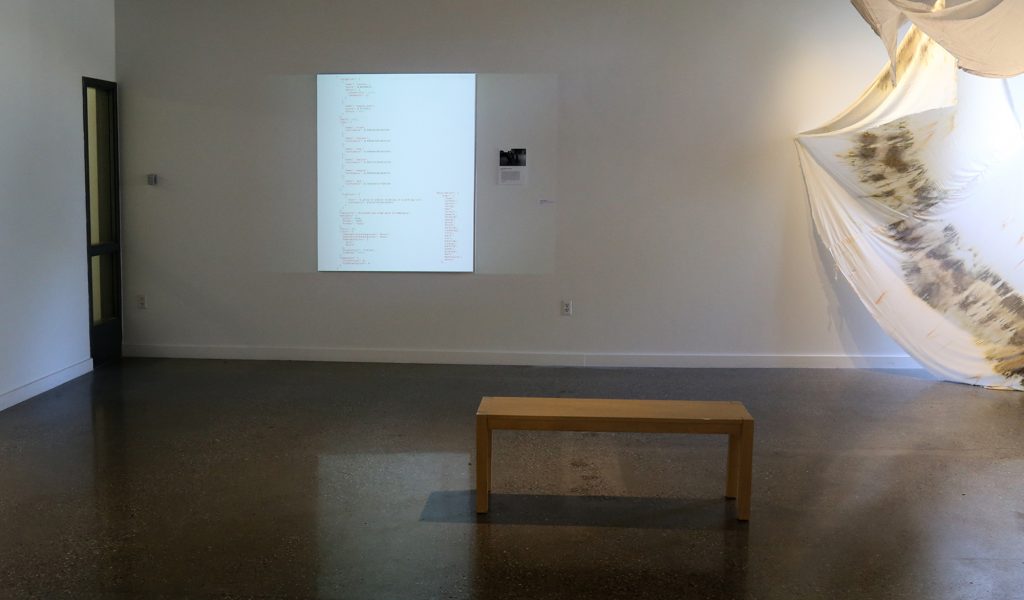
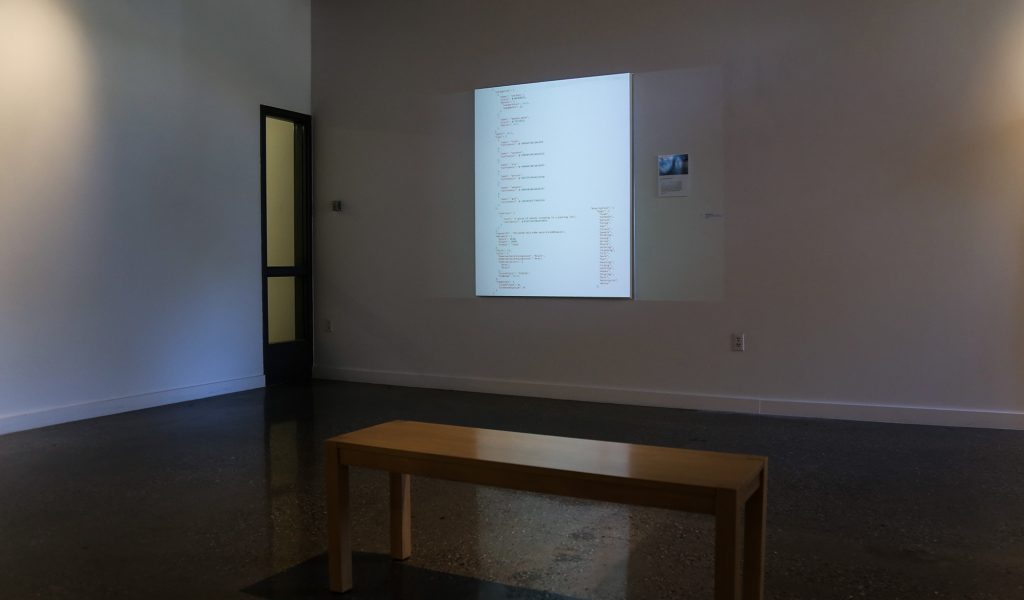
The installation presents the machine’s analysis of the photograph as a visual code projected onto a traditional white canvas—an intentional nod to the history of painting as a human-centered artistic medium. The canvas, historically a surface for conveying layered meaning and emotion, becomes a site of critique, juxtaposing the algorithm’s flattened interpretation against the deep social resonance perceived by human audiences. This aesthetic tension highlights the inadequacies of machine vision in capturing the ethical, emotional, and historical dimensions of images.
Inspired by the computational turn in aesthetics, the project draws on theoretical frameworks that explore how algorithms reshape visual culture. As Marita Sturken and Lisa Cartwright argue, the act of looking is always socially constructed, mediated by cultural, political, and historical contexts.[2] Machine vision, by contrast, operates within a regime of visibility governed by quantifiable data, prioritizing efficiency and objectivity over context and meaning.[3] Scholars such as Lev Manovich and Camiel van Winkel have critiqued this algorithmic logic, warning that the automation of aesthetic judgment risks eroding the depth and complexity that human perception brings to images.[4]
This project is interrogating the ethical implications of delegating interpretive authority to algorithms. It questions whose interests are served by these systems, how they shape public perception, and what is lost when machines dominate the processes of visual representation. As Rosi Braidotti and others suggest, computational aesthetics reflect broader posthuman paradigms where agency is distributed across human and non-human systems.[5] This project highlights the urgent need to examine how these paradigms intersect with socio-political events, shaping cultural narratives and reinforcing existing power structures.
Through its critique of algorithmic vision, Taking a Stand underscores the importance of preserving human-centered perspectives in an increasingly data-driven world. By contrasting the emotional resonance of Evans’ protest with the algorithm’s reductive analysis, the installation invites audiences to reflect on the cultural and ethical stakes of machine vision. The project advocates for a more inclusive and critical approach to computational technologies, fostering an awareness of their biases and limitations. Ultimately, it calls for a reimagining of how we integrate human and machine perception to create a more empathetic and just visual culture.
[1] Widener, Jeff. “Tank Man.” Associated Press, June 5, 1989.
[2] Marita Sturken and Lisa Cartwright, Practices of Looking: An Introduction to Visual Culture (Oxford: Oxford University Press, 2001), 33–45.
[3] Camiel van Winkel, The Regime of Visibility (Rotterdam: NAi Publishers, 2005), 23–28.
[4] Lev Manovich, “Automating Aesthetics: Artificial Intelligence and Image Culture,” Cultural Analytics 5, no. 1 (2020): 5–16.
[5] Rosi Braidotti and Maria Hlavajova, Posthuman Glossary (London: Bloomsbury Academic, 2018), 88–91.
 Previous Project
 Next Project
Image analysis through Microsoft cognitive services
Comparing image analysis through machine vision versus human vision.
Code projection on canvas
46 x 66 in.
2018
Gallery 101, Kresge Art Center, Michigan State University, East Lansing, MI
- Client:
- Categories:
- Skills:
- Share:
Previous ProjectNext Project